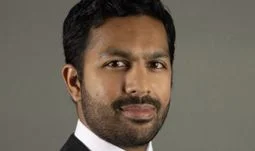
"Gary Stevenson was loved and nurtured at Citigroup. His comments are hurtful"

I worked with Gary Stevenson, the ex-Citigroup trader, YouTube anti-inequality campaigner and author who now claims he was the best trader in the world and who spends his time campaigning for a wealth tax. Like many of Gary's other former colleagues, I don't recognise the world he portrays in his book
Get Morning Coffee ☕ in your inbox. Sign up here.
Gary was very much loved at Citigroup. He describes us collectively as "dysfunctional maths geniuses, overfed public schoolboys and borderline psychopaths," but that's disingenuous. I was there and that's not how it was.
Gary joined Citi when he was only 21. He was very charismatic and had an amazing story. He was a kid who was intelligent, bright-eyed, who worked hard and was very likeable. A lot of us felt very fatherly towards him. We knew he'd had a challenging upbringing, and we mentored him. He was always referred to as a "good kid.".
Over time, though, Gary changed. He's complex and complicated and has a chip on his shoulder about private school educated people, even though not all of us on the desk were like that. The money changed Gary. When he first got a big bonus, he was surprised, but a year or so later I can remember him going around and saying, "If I don't get $1m at the end of this year, I am f*cking out of this place."
Gary was a good trader but he wasn't the best. Nor was he one of the biggest traders in the world. He was a guy sitting on a making big decisions, but we all were. To be the biggest and best trader in the world, you'd have to be looking across equities, commodities, credit. Gary might have been the biggest trader at Citi in London for a while, but that's about it. To be the best trader you need to make consistent money over long periods of time, but Gary didn't do it for long enough. He was well-supported and guided, and he made good money when everyone made good money. The world was going down the pan, and Gary jumped on it like everyone else.
Gary makes everyone he worked with at Citi seem amoral. In fact a lot of us have sympathy for his calls for a wealth tax, but we question how it could be implemented and whether the banking industry is the main problem. He never mentions that 50% of everything you earn in banking today goes to the government in tax. I'm grateful for my time in banking, but Gary seems very bitter. It's hurtful to those of us who tried to help him.
Some things are left out of the book. For example, Gary doesn't say much about our boss, who was one of the most impressive human beings I've met in my life. He is intelligent, honest, fair and compassionate, and he has emotional intelligence beyond his years, but there's no mention of that.
The trading floor has an intense effect on people, and you don't know what it will be in until you're in it. Gary's descriptions in the book of losing weight, ending relationships and living in an apartment with no furniture and little sleep suggest he was becoming unraveled, both mentally and physically.
From the perspective of those of us on the desk with him, this unraveling started when Citi wouldn't let Gary leave with his bonuses. Everyone in banking knows that you have to wait three years before bonuses fully vest, and that bonuses are withheld because they want to hold onto you. It's in your contract, and Citi has to uphold it because the bank doesn't want to make exceptions to the rule. Gary implies that once you are in, it’s impossible to leave. That's not true. He could have left at any time, but that meant “leaving the money.”
Gary couldn't accept this that. He is not good at accepting authority and wants things his way. When he wasn't allowed to leave with his bonuses, he refused to work and his mental and physical health visibly deteriorated.
Gary, however, says he “won” because Citi gave him his deferred stock and let him leave early. That’s not my take. Citi acted out of compassion and gave a young man his money before his physical and mental state got worse. I believe that our boss went upstairs and asked for Gary to be allowed to leave: he was concerned about Gary's health. And of course, Gary was of no use to the bank if he is not making money trading; that’s the nature of the City.
I wish Gary well, but I also want him to think about the way he's sensationalized his story and burned a lot of people who tried to help him. Reading his book, I'm left with a lot of questions. Did he learn anything about himself from his time at the bank? Does he have cautionary messages for other aspiring traders? Where is his gratitude for the people and institution that nurtured him and gave him an opportunity for wealth and the choices that come with that wealth? Is there any reflection and introspection? I'm not so sure that there is.
Have a confidential story, tip, or comment you’d like to share? Contact: +44 7537 182250 (SMS, Whatsapp or voicemail). Telegram: @SarahButcher. Click here to fill in our anonymous form, or email editortips@efinancialcareers.com. Signal also available.
Bear with us if you leave a comment at the bottom of this article: all our comments are moderated by human beings. Sometimes these humans might be asleep, or away from their desks, so it may take a while for your comment to appear. Eventually it will – unless it’s offensive or libelous (in which case it won’t.)